Brazil Before the Runoff: What 25 October decides for European supply chains and plants
byDr. Matheus de Freitas Cecílio & Felix Kleiner
Dr. Matheus de Freitas CecílioSão Paulo, Brazil
Matheus de Freitas Cecílio is a sanctions, KYC and credit risk analyst at Danske Commodities and a research analyst at Eurasia Strategy Insights. He holds a PhD in International Political Economy from UFRJ, with doctoral research on China’s development model and its relationship with the United States.
Felix KleinerVienna, Austria
Felix Kleiner leads Pangea Intelligence and writes on how geopolitics reaches supply chains. His analyses examine critical dependencies, nearshoring dynamics and the strategic implications of global risk events.
October 2026/30 min read/Data as of 5 October 2026/
DE
Brazil voted on 4 October. Flávio Bolsonaro took 47.0 per cent of valid votes, Lula 45.2. Neither reached half, and both go into the runoff on 25 October. European buyers of coffee, soybean meal, iron ore and ferroniobium, and anyone running a plant in São Bernardo, Curitiba or Joinville, will be planning 2027 against two possible governments for another three weeks. Little of this touches the export basket, which rests on ore bodies and planted area and has survived every change of government since 2000. The runoff will settle how far critical minerals are processed inside Brazil, whether the tariff wall to Washington comes down, how much political cover EU-Mercosur ratification still has, and whether the 40-hour week comes. Those four questions determine what a supplier in Minas Gerais will cost in 2028 and on what terms it delivers, and what it costs to run a shift of one’s own in São Paulo.
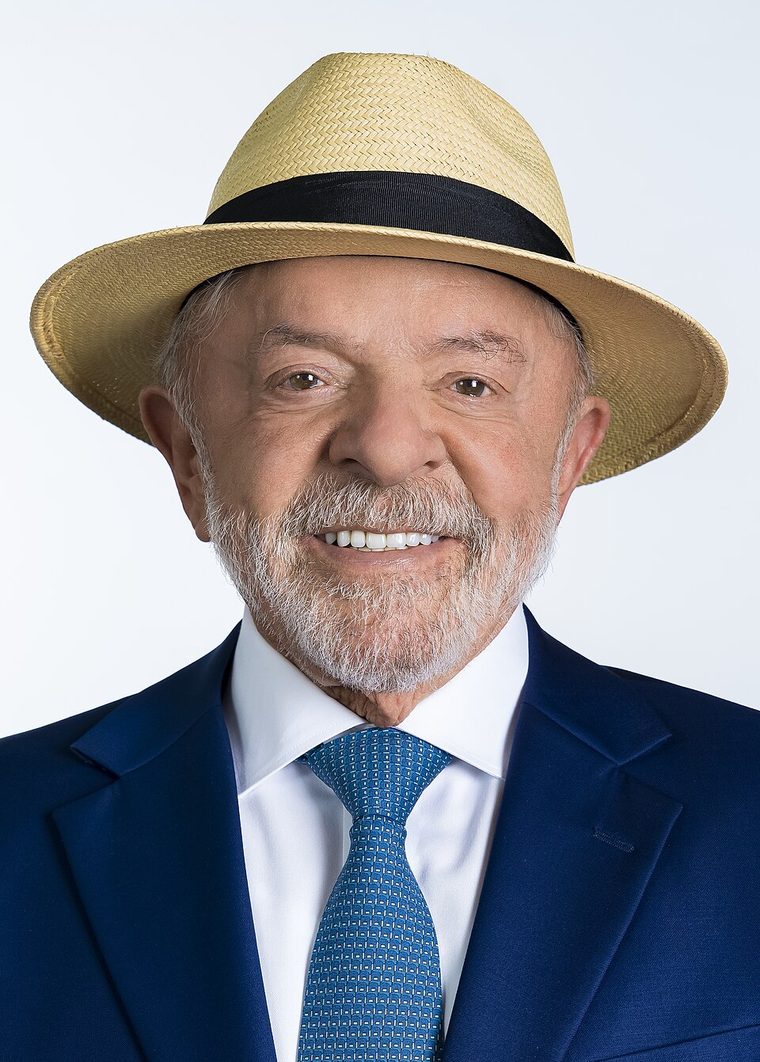
Luiz Inácio Lula da Silva80, Workers’ Party PT, president since 2023
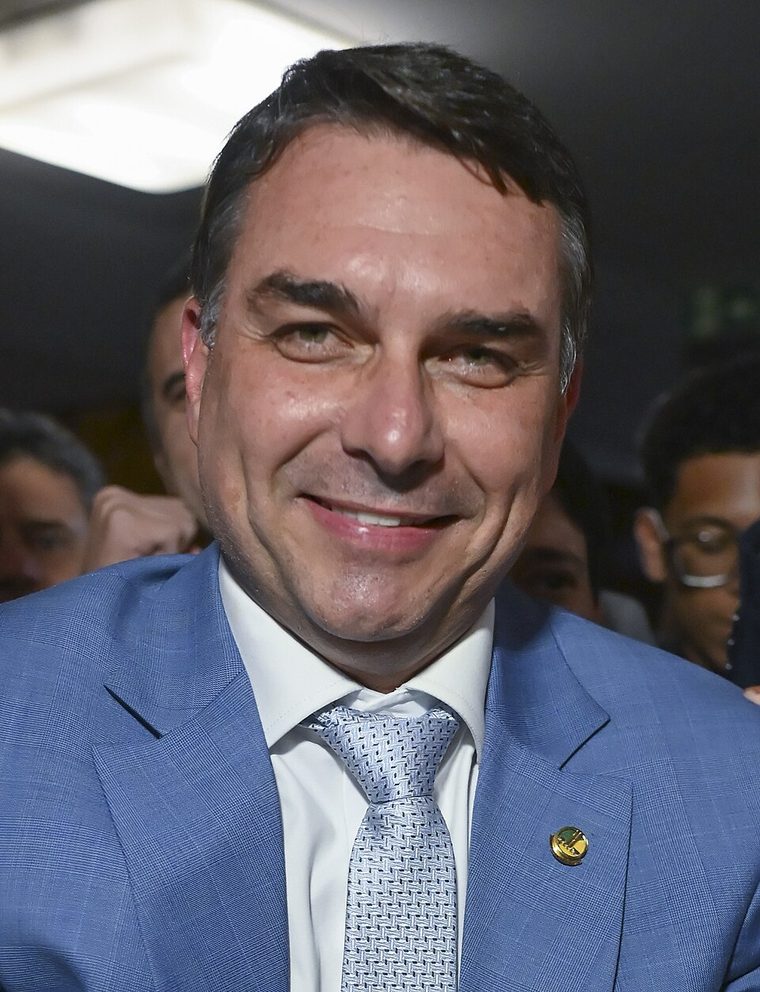
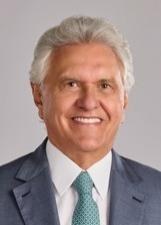
Flávio Bolsonaro45, Liberal Party PL, senator for Rio de Janeiro
The runoff on 25 October will be decided between these two. Photos: Ricardo Stuckert, official photograph of 8 August 2026 (CC BY-SA 4.0), and Ton Molina / Agência Senado, 30 April 2026 (CC BY-SA 4.0).
01
What the election does not change
In 2000, 24 per cent of Brazilian exports went to the United States and 2 per cent to China. In the first half of 2026 China took 31.5 per cent and the United States 9.4 per cent, the lowest reading since the series began in 1997.1,2 Those 26 years span five presidents, an impeachment, an attempted coup and a trade war, and through every one of those ruptures the shift in export shares continued at the same pace.
Where Brazil exports: 2000 and first half of 2026
Share of total Brazilian exports. Sources: UN Comtrade and WITS for 2000, Amcham Brasil based on MDIC data for the first half of 2026.1,2
The currency stabilisation of the 1990s ended hyperinflation and lifted the real. Brazilian industry lost ground, and the same years brought China’s industrialisation with its appetite for iron ore, oil and soybeans. Brazil specialised in what Beijing needed. In 2025 China took 77 per cent of Brazil’s soybean exports and 67 per cent of its iron ore.3 Chinese capital followed the trade flows: 6.1 billion US dollars of direct investment in 2025, 45 per cent more than the year before; by the count of the CEBC business council, Brazil remains the largest destination for Chinese direct investment.4 Mining tripled its share; the car industry came third with just under 16 per cent.
From 2002 to 2014 every runoff pitted the Workers’ Party PT against the social democratic PSDB, a predictable duel; the economy grew by 3.4 per cent a year between 2000 and 2014.5 In 2014 Dilma Rousseff won with 51.6 per cent, the Lava Jato corruption investigations hit Petrobras and the PT, impeachment followed in 2016, and 2018 brought Lula’s imprisonment and the election of Jair Bolsonaro, a former army captain with open sympathy for the military dictatorship. The decade from 2015 averaged 0.9 per cent growth, a second lost decade after the 1980s.
2000 to 2014
3.4 %
growth a year, PT against PSDB
2015 to 2024
0.9 %
growth a year, Lava Jato to Bolsonaro
China share H1 2026
31.5 %
of exports, up under every government
World Bank, GDP growth Brazil (NY.GDP.MKTP.KD.ZG), annual averages 2000 to 2014 and 2015 to 2024; Amcham Brasil / MDIC
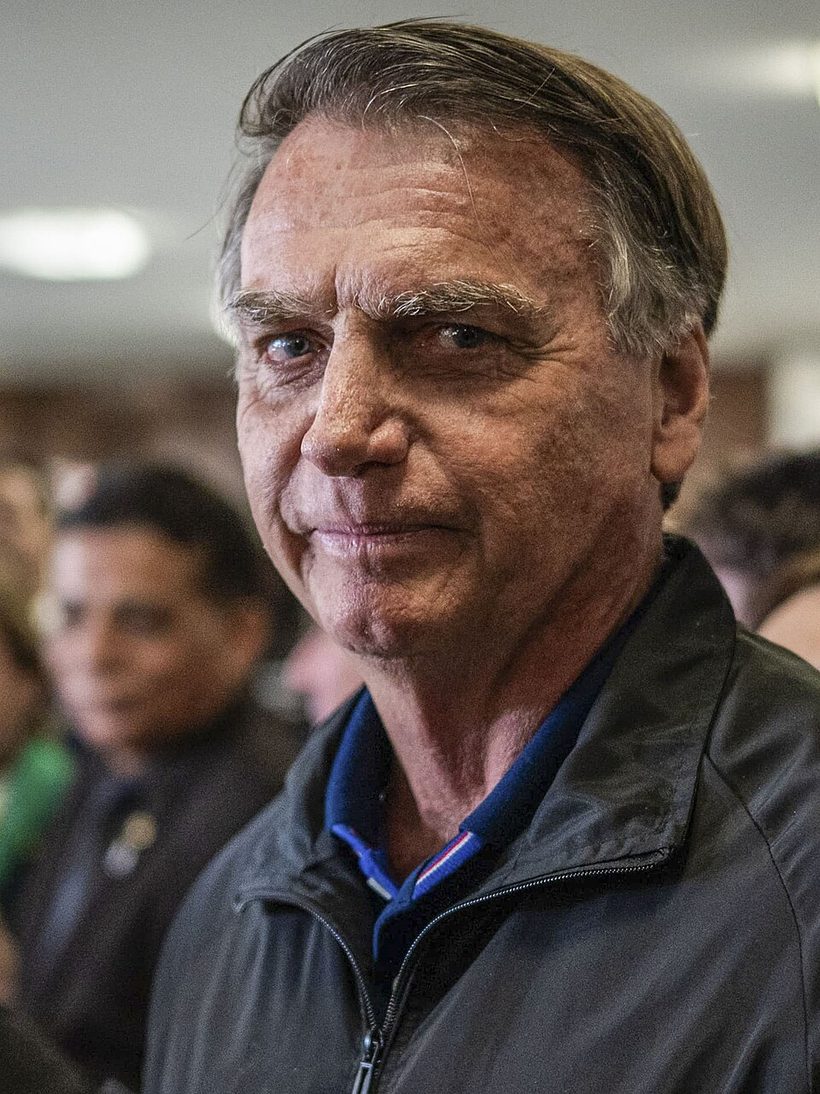
Bolsonaro governed for four years on sharp rhetoric against Beijing, and the trade data records no break at all. China’s soybean share kept rising and so did investment, because agribusiness, his own base, needs the Chinese market. In September 2025 the Supreme Court sentenced him to 27 years for the attempted coup after the 2022 election; since March 2026 he has been serving the sentence under house arrest on health grounds.6 From there he still decides who may run on the right.
Jair Bolsonaro in the National Congress in July 2025, two months before the Supreme Court verdict. Photo: Senado Federal (CC BY-SA 4.0).
The two boxes below separate what stays whoever wins from what depends on the result.
Unchanged, whoever wins
Soybeans, iron ore, oil, animal protein and coffee as the export base. China as the largest buyer and a growing investor. Vale, Petrobras and JBS as suppliers. The cost advantages in land, water and ore grade, which are independent of government policy.
Decided on 25 October
How far critical minerals are processed in Brazil, and who holds the offtake. The owners of Petrobras and Banco do Brasil. The tariff path with Washington, and with it the diversion of volume to Europe. The political climate for ratifying EU-Mercosur.
02
Rare earths
With 21 million tonnes, Brazil holds the world’s second largest rare earth reserves, behind China with 44 million tonnes.7 Almost none of it is mined. In 2024 the country exported 20 tonnes of rare earth compounds, against world production of 390,000 tonnes. The first commercial mine, Serra Verde in Goiás, has been running since 2024 and aims for 5,000 tonnes of oxide a year in 2026.8 The deposits in Goiás, Minas Gerais and Bahia sit in ionic clays rich in heavy rare earths such as dysprosium and terbium, the elements for which Europe cannot yet do without Chinese separation plants.
Second largest reserves, almost no production
Reserves per USGS Mineral Commodity Summaries 2026, production 2024 per USGS, Brazil per export statistics. Serra Verde per company information.7,8
Both camps want to close this gap, and both want the processing done in Brazil. On 16 September 2026 Lula signed the National Policy for Critical and Strategic Minerals, which names lithium and niobium alongside rare earths. A council in the presidential office reviews changes of control and international offtake agreements, can tie export conditions to the degree of processing, and requires companies to declare destination, end buyer and processing stage. The five billion reais in tax credits do not begin until 2030 and run to 2034, alongside a guarantee fund of two billion reais.9 The review powers, by contrast, apply from entry into force. Anyone signing an offtake agreement for Brazilian concentrate in 2027 will be negotiating under the new regime while the country still has no separation capacity.
Flávio Bolsonaro also holds to processing inside Brazil and points the offtake at the United States. Brazilian-American partnerships in rare earths could reduce Washington’s dependence on Chinese separation capacity, as he put it to Foreign Policy.10 A paper from his circle, written in March 2026 under his campaign logo for the Rockbridge Network co-founded by Vice President Vance, became public in mid-September: no export of unprocessed ore, a parallel supply system with the United States, up to 100 billion US dollars of investment over ten years. Its author says the paper never reached any US authority.11
No Brazilian president will decouple from China; the soybean and ore market is far too large for that. What is open is who takes the oxide once Brazil can separate it itself.
Dr. Matheus de Freitas CecílioSão Paulo
Anyone who wants to buy oxide from Goiás in future will be negotiating either with a council in the presidential office or with a counterparty that has signed an offtake commitment to Washington. By the ECB’s count, more than 80 per cent of large European companies are within three supply tiers of a Chinese rare earth supplier.12 Brazil will do little to change that number this decade, because even at target capacity Serra Verde would supply just over one per cent of world production.
Open-pit mining, illustrative. The Brazilian deposits sit in ionic clays, mined in open pits and leached on site. Video: Pexels.
03
Two camps, one runoff
In the first round on 4 October Flávio Bolsonaro took 47.03 per cent of valid votes, Lula 45.16, and Cury, Santos, Caiado and Zema 7.6 between them, on a turnout of 78.9 per cent. All four pollsters in the table below had Lula ahead in the first round, by one to five points, and the four eliminated candidates still had a combined eleven per cent of respondents in the Datafolha poll. The two leaders are 1.87 points apart; Flávio Bolsonaro is 2.97 points short of half, Lula 4.84. No polls taken since the first round have been published. The last ones before the vote had the runoff at 48 to 45 for Lula with a two-point margin of error at Datafolha, 42 to 42 at Quaest and 47.7 to 47.6 for Flávio at AtlasIntel.13 Both candidates carried rejection ratings of 55 per cent in the Quaest reading at the end of September. Alongside the first round, Brazil elected its state governors, two thirds of the Senate and the entire Chamber of Deputies on 4 October; every state filled two Senate seats instead of one.
The result of 4 October
Flávio BolsonaroPL
47.0 %
LulaPT
45.2 %
Augusto CuryAvante
2.9 %
Renan SantosMissão
2.2 %
Ronaldo CaiadoPSD
2.2 %
Romeu ZemaNovo
0.3 %
Valid votes in the first round per TSE, as of 5 October 2026, 99.99 per cent of polling stations counted. The other six candidacies took 0.2 per cent between them. Bar length relative to the leading value. Photos: Tribunal Superior Eleitoral (CC BY 4.0), Lula: Ricardo Stuckert (CC BY-SA 4.0).13
Institute, field dates
First round
Runoff
Datafolha, 28 Sept to 1 Oct
Lula 42, Flávio 38
Lula 48, Flávio 45
AtlasIntel, 23 to 28 Sept
Lula 45.3, Flávio 42.2
Flávio 47.7, Lula 47.6
Quaest, 24 to 27 Sept
Lula 39, Flávio 34
42 to 42
Meio/Ideia, 25 to 28 Sept
Lula 39.4, Flávio 38.4
Lula 48.5, Flávio 48.0
Figures in per cent of respondents, runoff in each case Lula against Flávio Bolsonaro. All four surveys predate the first round, in which Flávio Bolsonaro took 47.0 and Lula 45.2 per cent of valid votes.13
The runoff is decided by the voters of the four strongest candidates eliminated on 4 October: Augusto Cury, a bestselling author with no political record; Renan Santos, 42, co-founder of the MBL movement that took Rousseff’s impeachment to the streets in 2016; Ronaldo Caiado, governor of Goiás until he declared his candidacy, and the voice of agribusiness in the Centro-Oeste; and Romeu Zema, who governed Minas Gerais and stands with the Partido Novo for a balanced budget and broad privatisation.19 Zema said on election night that he would oppose the PT in the runoff; Santos and Cury are backing neither candidate, and Caiado will not commit before speaking to PSD chairman Gilberto Kassab.13 At the end of August Nexus asked their voters directly, for BTG Pactual. In all four groups Flávio leads, most clearly among Renan Santos’s voters, and between just under a fifth and just over a quarter intend to vote blank, spoil the ballot or have not decided.13
Where the eliminated candidates’ votes go
Augusto Cury
2.9 %50 to Flávio, 23 to Lula, 27 blank, spoilt or undecided
Renan Santos
2.2 %69 to Flávio, 12 to Lula, 19 blank, spoilt or undecided
Ronaldo Caiado
2.2 %46 to Flávio, 27 to Lula, 27 blank, spoilt or undecided
Romeu Zema
0.3 %51 to Flávio, 31 to Lula, 18 blank, spoilt or undecided
to Flávio Bolsonaroto Lulablank, spoilt or undecided
Figure on the left: share in the first round per TSE, as of 5 October 2026, 99.99 per cent of polling stations counted. Bars: runoff preference of each candidate’s voters per Nexus for BTG Pactual, 28 to 30 August 2026, 2,005 respondents.13
Apply that split to the first round and Flávio Bolsonaro arrives at 51.2 per cent, Lula at 46.8; 1.8 points remain unallocated. The sum is a rough one, because the split dates from August and rests on subgroups of a survey of 2,005 respondents. It leaves out the 33.5 million registered voters who did not vote on 4 October and the 6.0 million blank and spoiled ballots; the two leaders are 2.2 million votes apart.
A rough tally for the runoff
Flávio Bolsonaro
51.2 %47.03 in the first round, plus 4.13 from the eliminated; 1.2 above half
Lula
46.8 %45.16 in the first round, plus 1.61 from the eliminated; 3.2 short of half
Authors’ calculation. Solid bar: share in the first round per TSE, as of 5 October 2026, 99.99 per cent of polling stations counted. Light bar: the votes of Cury, Santos, Caiado and Zema, split per Nexus for BTG Pactual of August 2026. Full width equals 55 per cent, and the line marks half. Not included: the six smallest candidacies, blank and spoiled ballots, those who did not vote in the first round, and any movement between the two camps.13
How much of that the winner on 25 October can deliver was also decided on 4 October, because that day the entire Chamber of Deputies and two thirds of the Senate were elected anew. On the provisional seat allocation the PL will hold 121 of the 513 seats in the Chamber, 22 more than after the 2022 election, and 28 of the 81 in the Senate; the PT federation together with PDT, PSB and PSOL-Rede has 124 deputies, and the PT nine Senate seats. Both camps are therefore more than 130 votes short of an absolute majority in the Chamber and need them from the other parties. A constitutional amendment needs three fifths in both houses in two rounds of voting, 308 deputies and 49 senators. Selling control of Petrobras or Banco do Brasil requires an act of Congress under the Supreme Court’s 2019 ruling.37 The vote on ending the 6x1 rule showed how tight that gets. The Chamber passed the amendment in May by 472 votes to 22, in the Senate the government counted 53 votes in early September against the 49 required, and the floor still did not get to vote, because the opposition led by Flávio Bolsonaro blocked the session. The vote was put off until after the first round and is still pending, with no date set.14
What Congress allows: seats against thresholds
Chamber of Deputies513 seats
Senate81 seats
PT federation, PDT, PSB, PSOL-RedeCentrão and othersPL
Seats after the election of 4 October 2026. Chamber per the seat allocation published by the electoral court (TSE) on 5 October 2026, not yet reported as final for Amazonas, Minas Gerais and São Paulo; Senate per CNN Brasil’s count of the 54 newly elected seats and the 27 terms running to early 2031; in the Senate only PT and PL are shown separately.38 Thresholds per Articles 60 and 69 of the constitution.
For a European buyer the two camps differ on who controls the offtake of critical minerals and on whether the tariff wall to the United States comes down. For a plant in Brazil, working hours come on top, along with the question of who gets them through the Senate.
Camp 01
Lula da Silva
Fourth term, seventh candidacy: state-led industry and a Chinese customer base+Open chapter
Lula is running again at the age of 80, campaigning on results that can be measured. Incomes up to 5,000 reais a month have been free of income tax since 2026, unemployment stands at a record low, and the end of the six-day week, the so-called 6x1 rule, passed the Chamber of Deputies in May and the Senate judiciary committee on 2 September; the floor vote is still pending.14 Working against him is antipetismo, the rejection of the PT by around half the electorate since Lava Jato and his imprisonment. Since the summer he has also had to contend with a federal police investigation, supervised by the Supreme Court, into his son Fábio, known as Lulinha, and the lobbyist Roberta Luchsinger on suspicion of influence peddling and money laundering. The defence rejects the allegations and no charges have been filed.15 In the polls before the first round the case cost Lula about a point.
A fourth term extends Nova Indústria Brasil, the industrial programme launched in 2024, with its emphasis on domestic processing and the new council for critical minerals. Chinese manufacturers are building to that policy: BYD built its hundred-thousandth vehicle at the Camaçari plant in Bahia in July 2026, and seven out of ten electric cars sold in Brazil now carry a BYD badge.16 The conflict with Washington would continue. A 25 per cent Section 301 tariff has applied since 22 July 2026, plus 12.5 per cent under the forced-labour regime, together 37.5 per cent on everything not on the exemption list; coffee, beef, orange juice and aircraft are on it.17 Lula campaigns openly in Europe for the ratification of EU-Mercosur.
For procurement: Petrobras and Banco do Brasil stay in state hands, so counterparty and financing structures are unchanged. Chinese plants in Brazil keep expanding, and because the tariff path into the United States stays blocked, volume keeps arriving in Europe.
For the plant: The 40-hour week comes, the Senate vote is still pending, and per Ipea it costs just under eight per cent per working hour. Finame credit and Nova Indústria Brasil continue, Mercadante stays at the head of BNDES. The debt ratio keeps rising under the existing fiscal framework, and the market expects a weaker real than under Flávio, which means fewer euros per real of profit and cheaper exports from Brazil. BYD, GWM and Chery keep localising and are looking for local suppliers.
Camp 02
Flávio Bolsonaro
The son as candidate: a tariff deal with Washington, Petrobras on the sale list+Open chapter
The eldest son of the former president, senator for Rio de Janeiro, has secured the camp. His father anointed him from house arrest, over the ambitions of his stepmother Michelle. He has also promised a pardon for his father and for those involved in the events of 8 January 2023. His programme covers fiscal consolidation, privatisation, with Petrobras and Banco do Brasil the obvious candidates, an immediate free-trade agreement with the United States, membership of Trump’s Shield of the Americas and the exclusion of the PIX payment system from non-Western clearing systems.10 On China, the platform presents itself as pragmatic. Under his father, soybean exports and Chinese investment stayed stable despite the rhetoric; after his attacks on Beijing, though, shipments of vaccine ingredients from China stalled for weeks in early 2021.
Since 11 September the Supreme Court has been investigating him in the Banco Master case: suspected corruption, money laundering and tax evasion involving the banker Daniel Vorcaro, whose fraud case the federal police put at 2.3 billion US dollars. Flávio says he has nothing to hide.18
For procurement: Petrobras, Banco do Brasil and state utilities become privatisation candidates, which means new owners among suppliers and financing partners. A tariff compromise with Washington would pull sugar, steel, footwear and farm machinery back into the US market and end the diversion to Europe. Chinese investment, from BYD to mining, would come under review, and rare earth volumes would be directed towards the United States.
For the plant: The 40-hour week hangs on a Senate in which he himself blocked the vote; his counter-proposal moves working hours into negotiation at company level. Subsidised credit from the Treasury gets a cap, and with it Finame. The currency markets are pricing in a stronger real, which means more euros per real of profit and dearer exports from Brazil. Petrobras and Banco do Brasil go on the sale list, but only with a law that needs 257 deputies. The tariff schedule on electric cars remains a Gecex decision, the Chinese plants stay, their expansions come under review.
What shifts for European buyers and plants
Procurement topic
Lula
Flávio Bolsonaro
Sourcing from Brazil
Iron ore, soybeans, animal protein, oil
Stays. Planted area and ore grade do not change with any government.
Stays. Agribusiness is his base.
Rare earths, critical minerals
Oxide instead of ore. The council in Brasília reviews every offtake agreement, Europe second in line.
Oxide instead of ore. Offtake with priority for the United States.
Sugar, steel, farm machinery (hit by US tariffs)
The diversion to Europe holds as long as the 37.5 per cent stand.
A tariff compromise pulls the volume back into the United States.
State companies as suppliers (Petrobras, Banco do Brasil)
Stay with the state, with more industrial policy through them.
Privatisation candidates, new owners in existing contracts.
Chinese plants in Brazil (BYD, mining, energy)
Keep growing, Camaçari as the template.
Under review, friction as under the father is possible.
EU-Mercosur, political pillar
Ratification more likely, Lula is a co-signatory.
Farm associations and parliaments get their 2019 argument back.
Exports to Brazil (machinery, cars, chemicals)
Tariff phase-out has run since May 2026, regardless of the result.
Phase-out continues, a US agreement brings competition.
Producing in Brazil
Working hours (end of the 6x1 rule, 44 to 40 hours)
Comes. Senate vote pending, 40 hours within 14 months, around 8 per cent per hour.
Blocked the vote, wants negotiation at company level. Timetable open.
Financing (BNDES, Finame, 50 % local content)
Stays. An extra 140 bn reais until December, Mercadante in office.
Cap on subsidised credit from the Treasury.
Real and fiscal rule
Fiscal framework stays, debt ratio of 82.9 per cent keeps rising. Market expects a weaker real.
New debt rule, primary surplus. Market prices in a stronger real, Goldman 4.50 to 4.80 per dollar.
Chinese plants as neighbours (BYD, GWM, Chery)
Keep localising, the 35 per cent tariff forces them. New buyers for suppliers, new competition for OEM customers.
Plants stay, expansions under review. The tariff schedule is a Gecex decision and appears in no programme.
Better terms for European companiesWorseChange of ownership or rulesUnchanged
Choose a camp to highlight the column.
An assessment by the authors, as of 5 October 2026. Rows are selected for relevance to buyers and plant managers in the DACH region.
04
Who produces in Brazil
Around 1,600 companies with German capital produce or sell in Brazil and account for roughly a tenth of the country’s industrial value added; the Bundesbank counts 675 Brazilian subsidiaries of German investors with 246,000 employees and 65 billion euros in turnover.39 The EU holds the largest stock of foreign direct investment in Brazil at 276 billion euros, and Austria is present with around a hundred subsidiaries of its own, 35 of them manufacturing. The weight sits in the industrial belt from Minas Gerais to Rio Grande do Sul: the ABC region around São Paulo, where Volkswagen has been building cars since 1957, Campinas and Sorocaba, Curitiba as the country’s third largest automotive cluster, Joinville with its metal and automation industry. That belt voted for Bolsonaro in 2022 except for Minas Gerais. In the first round on 4 October Flávio Bolsonaro led in all six states of that belt. In São Paulo he took 51.9 per cent of valid votes against 38.2 for Lula, in Minas Gerais 48.2 against 43.3. Lula passed 50 per cent only in the Northeast, where he won all nine states, Bahia by 66.2 to 28.5 per cent, and that is where BYD’s plant has stood since 2025.34
Where European industry stands in Brazil, and how those states voted
Cluster with European plantsChinese car plantRaw material productionSeaportLulaBolsonaro camp
Fill: winner by state, TSE, first round of 4 October 2026. Outlines: IBGE. Sites: the authors’ selection based on the plant locations of European manufacturers and suppliers, the BYD, GWM and Caoa Chery plants, and the production of niobium, rare earths and iron ore.34,35
For a plant in that belt the runoff decides four lines of the cost sheet.
Working hours
The Chamber of Deputies voted on 27 May, 472 to 22, to abolish the 6x1 rule. The working week falls from 44 to 40 hours over five days with two paid rest days, with no cut in pay. Two months after promulgation the limit is 42 hours, twelve months later 40. Employees already below 40 hours, graduates earning more than two and a half times the social security ceiling, and the 12-hour shifts in health, security and transport are exempt; collective agreements may allow longer days during the 42-hour phase so that the five-day week holds.14 The industry federation CNI puts the extra cost at up to 11.1 per cent of the industrial wage bill, between 58 and 88 billion reais a year; the research institute Ipea arrives at 7.8 per cent higher labour costs and less than one per cent of operating costs in industry and commerce.40 For a plant with 300 people in Joinville that is the difference between overtime and an additional shift, and it falls due within 14 months.
From 44 to 40 hours: the timetable of the constitutional amendment
Chamber, 27 May 2026
472 : 22
votes in the first round
Ipea
+7.8 %
labour cost per hour
CNI, industry, up to
11.1 %
of the wage bill, 58 to 88 bn reais a year
PEC 221/2019 as passed by the Chamber of Deputies on 27 May 2026; estimates by Ipea (February 2026) and CNI (February 2026).14,40
In the Senate the judiciary committee approved the text on 2 September. The government counted 53 votes for the floor against the 49 required, the opposition left the chamber, and Flávio Bolsonaro, himself a senator, led the blockade. He has not committed himself to this day and promotes a constitutional amendment of his own under which working hours would be negotiated between company and workforce. Lula has written the 40 hours into his government programme. The Senate president has moved the vote to after the first round; there is no date yet.14 With Lula in the Planalto the 40 hours come. Under Flávio the timetable hangs on a Senate whose 54 new seats were also filled on 4 October.
The real, the policy rate and the debt ratio
Gross government debt stood at 82.9 per cent of GDP in August, the highest since March 2021, with interest costs at 8.7 per cent of GDP.41,42 The central bank cut the policy rate on 16 September for the fifth time in a row, to 13.75 per cent; the market expects 13.50 by year end. The euro cost 5.85 reais on 1 October, after an annual average of 6.31 last year.36,41 Neither programme deals with the debt burden in concrete terms, the Peterson Institute noted at the end of September. Lula wants to keep the 2023 fiscal framework and raise the minimum wage above inflation. Flávio wants to replace it with a rule that stabilises the debt ratio, plus primary surpluses, ten fewer ministries and a cap on subsidised credit from the Treasury.42 The currency markets have positioned themselves. Hedging against a weaker real was as cheap in mid-September as at any time since February 2020, because traders expect an appreciation if Flávio wins. Goldman Sachs sees the dollar between 4.50 and 4.80 reais under credible fiscal policy and around 5.80 if the fiscal premium of December 2024 returns; JPMorgan puts the negative case at 5.50 and the positive one at an appreciation of roughly six per cent.42
For the subsidiary in Brazil the exchange rate works twice. A stronger real raises the euro value of earnings and of the balance sheet and makes every part exported from Brazil dearer; a weaker real does both in reverse. The range since 2018 runs from 3.92 to 6.72 reais per euro.
What a plant is worth in euros: reais per euro and the policy rate since 2018
Banco Central do Brasil: PTAX euro (selling rate), monthly averages of daily values, January 2018 to 1 October 2026; Copom Selic target on the days it changed.36
The Chinese neighbours
Since 1 July 2026 assembled electric and hybrid cars carry an import duty of 35 per cent; knocked-down kits stay at 14 per cent until the end of the year and move to 35 from January 2027, cushioned by a duty-free quota of 463 million dollars for six months.45 The schedule has brought the Chinese manufacturers into the country. BYD has assembled in Camaçari in Bahia since July 2025, built its hundred-thousandth vehicle in July 2026, employs 5,500 people and aims for 10,000; capacity is to rise from 150,000 to 600,000 vehicles a year, with a press shop, body shop and paint shop by year end and 50 per cent local content. GWM has built 50,000 vehicles a year in Iracemápolis near São Paulo since August 2025 with a 60 per cent localisation target; Caoa Chery is doubling Anápolis to 160,000 and adding Changan.46 In August electrified vehicles held 22 per cent of the passenger car market, and in hybrids BYD and GWM sit ahead of Toyota.
Three Chinese plants, capacity today and target, vehicles a year
BYD, Camaçari (BA)
150,000Target 600,000; since July 2025; target 50 % local content by end of 2026
Caoa Chery, Anápolis (GO)
80,000Target 160,000; expansion under way; with Changan target around 200,000
GWM, Iracemápolis (SP)
50,000since August 2025; target 60 % localisation, third shift since April
Capacity todayAnnounced target
Company statements and trade press, July to September 2026; import duty per the Gecex decision of 23 June 2026.45,46
For a European supplier in São Paulo the Chinese carmakers are a potential customer and at the same time a competitor to its existing customers. In August 2025 BYD canvassed suppliers with the associations Sindipeças and Abipeças, has brought 47 companies to Bahia and is negotiating with around 150 more; the first approval went to Continental.46 Under Lula that continues, the tariff is his instrument. Under Flávio Chinese investment comes under review; the tariff schedule itself sits in a decision of the foreign trade chamber Gecex and in no election programme.
Credit, local content and the tax reform
Whoever sells a machine in Brazil usually sells it with Finame credit from the development bank BNDES: up to ten years, two years’ grace, interest from the long-term rate TLP, whose fixed component stands at 8.12 per cent in October, plus 0.95 per cent for the bank and the margin of the local institution. Access is limited to products in the manufacturer register, and for that at least 50 per cent of the product must be Brazilian value added, 30 per cent from the bill of materials alone.43 BNDES disbursed 169.7 billion reais in 2025, 27 per cent more than the year before, and a further 74.8 billion in the first half of 2026; the industrial programme Nova Indústria Brasil was given an additional 140 billion reais in June, to run until December, and the automotive programme Mover pays tax credits of 3.5 to 4.1 billion reais a year until 2028 to manufacturers that develop and build in the country.43,44 Lula keeps BNDES president Mercadante in office and continues the programme. Flávio’s programme wants to cap subsidised credit from the Treasury and relaunch the privatisation programme. A machine builder whose Brazilian sales depend on Finame loses part of its financing under Flávio.
The tax reform runs regardless of the result. 2026 is a test year with 0.9 per cent CBS and 0.1 per cent IBS on every invoice, in 2027 the CBS replaces the PIS and Cofins levies, and from 2029 to 2032 ICMS and ISS are phased out. The management committee named a reference rate of 27.91 per cent in July for the 2027 budget planning, against a statutory ceiling of 26.5; the Senate sets the rate. Split payment, under which the tax is remitted straight out of the payment, arrives for business-to-business transactions only in 2028.47 The election decides who staffs the management committee and writes the implementing rules for the transition, while the calendar is fixed by law.
For the components a subsidiary sources from Europe, the first tariff reduction step of the EU-Mercosur agreement has applied since 1 May, 1.3 to 1.7 points on machinery, alongside the capital goods tariff schedule reorganised in February at 7.2, 12.6 and 20 per cent. Which rate applies is set per tariff line in Annex 2-A-2 of the agreement, and the importer needs the European supplier’s statement of origin.48
Three weeks remain until the runoff, and that is enough to run the 2027 budget twice, once with a 40-hour week, Finame credit and a weaker real and once with working hours open, capped credit and a stronger real.
Felix KleinerPangea Intelligence
What a plant manager does with this
APut the 40-hour week into the 2027 plan
The Chamber voted 472 to 22, and in September the government had the votes it needed in the Senate, but the session never took place. Anyone planning 2027 headcount on 44 hours is planning on a rule that now hangs on a single voting date. The 14-month transition leaves time to add a shift, while a new building takes longer.
BCheck the Finame register and local content before 25 October
A product without an entry in the BNDES manufacturer register sells in Brazil without the cheapest financing. The threshold is 50 per cent Brazilian value added. Under Flávio the pot gets smaller while the threshold stays where it is, and under Lula both stay as they are.
CRun the exchange rate in both directions
The banks put the dollar in a range of 4.50 to 5.80 reais depending on the outcome. For a subsidiary that earns in reais and reports in euros that is a difference of more than a fifth in reported earnings at unchanged performance. Anyone exporting from Brazil runs the same range with the sign reversed.
05
The European calculation
What Europe actually depends on in Brazil
Europe’s sharpest dependence today is on niobium. Brazil produces around 93 per cent of world supply, almost all of it from the open pit at Araxá in Minas Gerais.26 Some 83 per cent of European ferroniobium imports come from Brazil, the remainder from Canada, and the EU has no production of its own.27 Niobium goes into structural steel, pipelines and body panels as a microalloying addition of a few hundred grams per tonne of steel, and in those grades it is hard to substitute. The EU’s Critical Raw Materials Act lists niobium as a critical raw material. For strategic raw materials it sets the benchmark that no third country should supply more than 65 per cent, and at 83 per cent niobium has been above that for years. The new Brazilian minerals law lists niobium by name, which puts the raw material with the highest European concentration under the same review regime as the rare earths.
Brazil’s share, by product group
Ferroniobium
83 %of EU imports
Orange juice
75 %of world trade
Soybean meal
50 %of EU imports
Green coffee
41 %of German imports
Iron ore
19 %of EU imports, second behind Canada
Rare earths
< 1 %of EU imports, against 21 Mt of reserves
The reference base follows each value, so the bars read only within their own row. Ferroniobium and iron ore per Eurostat, soybean meal per Comext and Abiove, green coffee per the German Coffee Association, orange juice per USDA.26,27,28,29,30,31
In agricultural goods the dependence spreads across more suppliers, and the volumes are larger. In 2025 Brazil supplied around half of the soybean meal the EU imports, 11.7 million tonnes, which is the protein base of European livestock farming.28 Brazil supplied 41 per cent of German green coffee in 2024, out of annual imports of more than a million tonnes.29 Three quarters of the orange juice traded worldwide comes from Brazilian harvests, and the EU is the largest buyer.30 In iron ore Brazil ranks second behind Canada with 19 per cent of EU imports.31
These shares hold whichever way 25 October goes. The terms on which those goods reach Europe can move, and three of them have a date inside the next twelve months.
The agreement and the ban
The trade pillar of EU-Mercosur has applied provisionally since 1 May 2026. Over 15 years, tariffs fall on 91 per cent of EU exports to South America, the 35 per cent duty on cars among them, along with machinery and chemicals; in return the EU liberalises 92 per cent of its imports from Mercosur. For sensitive farm goods the agreement caps the volumes: 99,000 tonnes of beef at a 7.5 per cent duty, 180,000 tonnes each of poultry and sugar, and 650,000 tonnes of ethanol.20 The political pillar of the agreement needs the consent of the European Parliament and of all 27 national parliaments. Argentina and Uruguay have ratified; in Europe the process has started and will take years.
Since 3 September the EU has accepted no beef, poultry, eggs or honey from Brazil, because in the Commission’s view Brasília has not sufficiently documented its rules on antibiotics in livestock farming. In May the EU removed Brazil from the list of compliant countries, under pressure from its own farmers and four months after the agreement was signed. In 2025 Brazil was the EU’s second largest beef supplier with 92,000 tonnes and 713 million euros.21 The dispute predates the campaign, and the ban marks the point where ratification is exposed. A Bolsonaro in the Planalto hands the farm associations back every argument they used against his father in 2019. The Peterson Institute expects that under a Flávio presidency, European capitals would again see the Brazilian government as the main obstacle to ratification.22
The proof that falls due on 30 December
The second is written into European law and does not depend on Brasília. From 30 December 2026, large and medium-sized companies must prove, for soya, beef, coffee, cocoa, palm oil, rubber and timber, that the goods do not come from land deforested after 31 December 2020; for small operators the date is 30 June 2027. The proof runs through geolocation coordinates for every plot of production, submitted in a due diligence statement, and Brazil is classified as standard risk, which means the full due diligence obligation.32 A German roaster or compound feed producer must have the chain down to the farm documented before the first container is unloaded after the cut-off, and that applies to goods already in transit or in storage today.
Brasília has no say over the deadline, though it staffs the institutions that produce the evidence. The proof rests on Brazilian land registry data and on the satellite analysis of the research institute INPE, and both depend on budgets and staff. Under Jair Bolsonaro the environmental agencies and the publication of deforestation figures came under political pressure; under Lula, INPE has reported falling rates for the Amazon since 2023.33 Liability for what the due diligence statement says rests with the company that submits it.
The tariff path to Washington
For the DACH region Brazil matters mainly as a source of imports. Germany bought goods worth 9.3 billion US dollars in 2024, of which 2.1 billion was coffee, 1.5 billion ores, 700 million pulp and 600 million animal feed.23 Coffee showed how fast these flows can turn. When the United States hit Brazil with 50 per cent in the summer of 2025, Germany became the largest buyer of Brazilian coffee with 5.4 million bags and 13.5 per cent of Brazil’s coffee exports.24 In November 2025 Washington took coffee off the tariff list again, and the advantage disappeared within a season. For sugar, steel, footwear and farm machinery that reversal is still pending, and it depends on a tariff compromise that only one of the two camps is seeking.
What a buyer does with this
DContract critical minerals at the oxide or metal stage
Under both camps the export of unprocessed ore becomes a transaction that requires approval. A contract written on concentrate will hang on a council in Brasília or on an offtake agreement with Washington from 2027. Whoever already records processing stage, origin and end buyer in the contract is supplying the details the new law requires anyway.
ECarry ferroniobium as a separate purchasing category
In most companies niobium is bundled into steel purchasing as an alloy surcharge and appears on no risk register, even though 83 per cent of European imports come from a single country. Since September the raw material has fallen under the Brazilian review regime for strategic minerals. Anyone buying structural steel, pipe or body panels on longer contracts should ask the supplier where the ferroniobium comes from and which price adjustment clause applies if export conditions change.
FCollect plot coordinates by the end of October
From 30 December 2026 every shipment of soya, coffee, beef, cocoa, palm oil, rubber and timber needs the coordinates of the plot of production. Brazilian cooperatives and traders deliver that data with varying reliability, and the importer is liable for the statement. The request belongs in the current season, because goods arriving in January are being contracted today.
GTreat diverted volume as temporary
Sugar, steel and farm machinery came to Europe in larger quantities from 2025 only because the US market was closed. A compromise between Brasília and Washington turns that around, and coffee showed with the November 2025 exemption how quickly it happens. Contract durations and volume commitments built on this flow are better fixed after 25 October.
HCheck change-of-control clauses with state companies
Petrobras subsidiaries, Banco do Brasil as a financing partner and state utilities are on the privatisation list under Flávio. A change of ownership during the contract term changes counterparty, credit standing and contacts. Without a change-of-control clause the counterparty changes with the privatisation, and the contract does not provide for it.
ISeparate the tariff schedule from the political pillar
For exporters to Brazil the tariff phase-out has been running to schedule since May 2026, regardless of who moves into the Planalto in January 2027. The political pillar can still fall, and with it the climate for investment and permits.
06
What we are watching until 25 October
The Lulinha case: An indictment before the runoff would be the first real test of how much antipetismo can still be mobilised; in the polls before the first round the file cost Lula about a point.
The White House: Whether Washington announces further tariffs or sanctions before 25 October. The 50 per cent tariffs of 2025 tended to help Lula in the polls.
Banco Master: The investigation has been running since 11 September, and on 4 October Flávio came first. The open question is whether the Supreme Court takes further steps before the runoff.
The eliminated: Zema said on election night that he would oppose the PT in the runoff; Santos and Cury are backing neither candidate, and Caiado will not commit before speaking to PSD chairman Gilberto Kassab. Together the four hold 7.6 per cent of valid votes, with 1.87 points between the two leaders.
Two votes outside the campaign: The Senate votes on the end of the 6x1 rule once a date is set, with 53 votes counted against 49 required; the EU member states decide on readmitting Brazilian animal products, where poultry could return first after the review and beef will take longer.
10 November
Just over two weeks after the runoff, on 10 November, China’s suspension of its rare earth export controls expires.25 If Beijing does not extend it, the decision on Brazilian oxide falls in the same weeks in which a government is being formed in Brasília.
Let us talk about your suppliers in Brazil
Run your supplier base, contract terms, tariff paths and site costs against both camps before 25 October settles on one of them.
Dr. Matheus de Freitas CecílioPolitical Economy, Latin America & China
Dr. Matheus de Freitas Cecílio
Sanctions, KYC and credit risk analyst at Danske Commodities and research analyst at Eurasia Strategy Insights. PhD in International Political Economy from UFRJ, with doctoral research on China’s development model and its relationship with the United States. Based in São Paulo.
Leads Pangea Intelligence and writes on how geopolitics reaches supply chains, with a focus on critical dependencies and nearshoring dynamics.
Sources
UN Comtrade / World Bank WITS - Brazil exports by partner 2000: USA 13.4 bn USD (24.3 per cent), China 1.1 bn USD, total exports 55.1 bn USD
Amcham Brasil based on MDIC / Comex Stat - share of the United States and China in Brazilian exports, first half of 2026 (via Rio Times, July 2026)
MDIC / CEBC - Brazilian exports to China 2025: soybeans 77 per cent, iron ore 67 per cent of the respective export volume
Conselho Empresarial Brasil-China (CEBC) - Investimentos Chineses no Brasil 2025, May 2026: 6.1 bn USD, 10.9 per cent of Chinese outbound investment
World Bank - GDP growth (annual %), Brazil, indicator NY.GDP.MKTP.KD.ZG, retrieved 24 September 2026; annual averages 2000 to 2014 and 2015 to 2024, own calculation
Supremo Tribunal Federal - verdict against Jair Bolsonaro, September 2025 (27 years and 3 months); transfer to house arrest, March 2026 (AP / PBS NewsHour)
USGS - Mineral Commodity Summaries 2026, Rare Earths: reserves and world production 2024
Serra Verde - company information on production at Pela Ema, Goiás; Investing News Network, 2026
Política Nacional de Minerais Críticos, Estratégicos e Terras Raras, signed by President Lula on 16 September 2026; tax credits of 5 bn BRL running from 2030 to 2034, FGAM guarantee fund of 2 bn BRL; covers lithium, niobium and rare earths among others (Agência Senado, Câmara dos Deputados, Reuters, September 2026)
Catherine Osborn - How Flávio Bolsonaro Sees the World, Foreign Policy, 21 September 2026
Amado Mundo, 12/13 September 2026, and South China Morning Post, 14 September 2026 - paper from Flávio Bolsonaro’s circle addressed to the Rockbridge Network, dated 19 March 2026
ECB - Economic Bulletin 6/2025, box on the rare earth exposure of European companies
Tribunal Superior Eleitoral - Divulgação de Resultados, first round of 4 October 2026, as of 5 October 2026 with 99.99 per cent of polling stations counted: valid votes by candidate, turnout 78.92 per cent, blank and spoiled ballots; Datafolha (28 September to 1 October 2026, 2,506 respondents, BR-08039/2026), AtlasIntel/Bloomberg (23 to 28 September 2026, 5,005 respondents), Quaest (24 to 27 September 2026, 2,004 respondents), Meio/Ideia (25 to 28 September 2026, 2,000 respondents); statements by Cury, Zema, Santos and Caiado on election night (Terra, 4 October 2026); Nexus for BTG Pactual (28 to 30 August 2026, 2,005 respondents) - runoff preference of the voters of Cury, Caiado, Santos and Zema (Revista Cenarium)
Câmara dos Deputados, 27 May 2026 - PEC 221/2019 ending the 6x1 rule, 472 to 22 and 461 to 19 votes, 44 to 40 weekly hours with two rest days, transition via 42 hours; Senado Federal, CCJ 2 September 2026 and obstruction on the floor (Agência Brasil); income tax exemption up to 5,000 BRL, in force since 2026
Polícia Federal / STF - investigations into Roberta Luchsinger and Fábio Luís Lula da Silva (O Tempo, 23 September 2026; GP1, 21 September 2026)
BYD - 100,000 vehicles from Camaçari, July 2026 (CleanTechnica, 27 July 2026)
USTR - Section 301 Brazil, 25 per cent from 22 July 2026, plus 12.5 per cent forced labour regime; exemption list with more than 2,100 tariff lines; PIIE, 2026
STF - release of the files in the Banco Master case, 11 September 2026 (AP, Al Jazeera, Bloomberg)
Americas Quarterly - Brazil: Meet the Candidates 2026
European Commission - EU-Mercosur Interim Trade Agreement, provisional application since 1 May 2026; Access2Markets factsheet
European Commission - suspension of imports of beef, poultry, eggs and honey from Brazil from 3 September 2026 (Agence Europe, Euronews)
Peterson Institute for International Economics - Why a scandal in Brazil may be good news for EU-Mercosur, 2026
UN Comtrade - Germany imports from Brazil 2024 (via Trading Economics)
Cecafé - Brazilian coffee exports 2025 by destination (Coffee Geography Magazine, 1 March 2026); US exemption for coffee and other agricultural products, November 2025 (Supply Chain Dive)
MOFCOM/GAC - announcements No. 55-58, 61 and 62 (October 2025) on rare earth export controls, suspended until 10 November 2026 by announcement No. 70 (November 2025)
USGS - Mineral Commodity Summaries 2026, Niobium: Brazil around 93 per cent of world production, Canada around 5 per cent; production site Araxá, Minas Gerais
Eurostat / European Commission - EU imports of ferroniobium by origin (Brazil 83 per cent, Canada 17 per cent); Regulation (EU) 2024/1252 on critical raw materials, benchmark of no more than 65 per cent per third country
European Commission (Comext) and Abiove - EU imports of soybean meal 2025, Brazilian share around 50 per cent, 11.7 million tonnes
German Coffee Association and Federal Statistical Office - German green coffee imports 2024: 516,000 tonnes from Brazil, around 41 per cent of the volume
USDA FAS - Citrus: World Markets and Trade, 2025/26 season; Brazilian share of world trade in orange juice concentrate around three quarters, EU as the largest buyer
Eurostat, analysis by IndexBox - EU iron ore imports 2025: Canada 34.9 per cent, Brazil 19.1 per cent, Ukraine 15.9 per cent
Regulation (EU) 2023/1115 on deforestation-free supply chains - application from 30 December 2026 for large and medium-sized companies, from 30 June 2027 for small ones; Brazil classified as standard risk; Commission simplification package 2026
INPE - PRODES and DETER, deforestation rates in the Brazilian Amazon; dispute over the publication of the data in 2019
Tribunal Superior Eleitoral - result of the runoff of 30 October 2022 and of the first round of 4 October 2026 by state (Divulgação de Resultados, as of 5 October 2026)
IBGE - Malhas territoriais, API v3, state boundaries at minimal resolution, retrieved 2 October 2026
Banco Central do Brasil - Sistema Gerenciador de Séries Temporais: series 21619 (euro, PTAX selling rate, daily) and series 432 (Selic target), retrieved 2 October 2026
Supremo Tribunal Federal - ADI 5624, plenary of 6 June 2019: sale of the controlling stake in a parent state company only with statutory authorisation and tender; constitution Art. 60 § 2 and Art. 69
Câmara dos Deputados - party benches after the 2022 election (PL 99, Federação Brasil da Esperança 80, União 59, PP 47, MDB 42, PSD 42, Republicanos 41, PSDB-Cidadania 18, PDT 17, PSB 14, PSOL-Rede 14, Podemos 12, others 28); Agência Senado, 31 October 2022 - Senate after the 2022 election (PL 14, PSD 11, MDB 10, União 10, PT 9); Tribunal Superior Eleitoral - Divulgação de Resultados, election of 4 October 2026, seats by party and federation in the Chamber of Deputies, as of 5 October 2026 (PL 121, Federação Brasil da Esperança 88, União Progressista 87, PSD 43, Republicanos 41, MDB 36, Podemos 27, PSB 15, PSOL-Rede 15, PSDB-Cidadania 11, Novo 10, Renovação Solidária 7, PDT 6, Avante 5, Missão 1); CNN Brasil, 5 October 2026 - Senate from 2027 (PL 28, PT 9, MDB 8, PP 6, Republicanos 6, PSD 5, União 5, PSB 4, Novo 3, others 7)
GTAI - Wirtschaftsstandort Brasilien, 18 October 2024 (around 1,600 companies with German capital, around 10 per cent of industrial value added); AHK São Paulo; Deutsche Bundesbank - foreign direct investment stocks, 30 April 2026, position at end 2024 (direct 18.8 bn euros net; by first operating unit 675 companies, 246,000 employees, 64.8 bn euros turnover); Eurostat, 5 November 2025 - EU FDI stock in Brazil 2024: 276 bn euros; WKO - Wirtschaftsbericht Brasilien, September 2026
CNI, 23 February 2026 - Redução da jornada de trabalho: extra cost 178 to 267 bn BRL a year, industry up to 11.1 per cent of the wage bill (58.5 to 87.8 bn BRL); Ipea - technical note, February 2026: labour cost plus 7.84 per cent, operating costs in industry and commerce below 1 per cent; Flávio Bolsonaro on the PEC (Metrópoles, 1 September 2026); Lula - government programme filed with the TSE, 8 August 2026
Banco Central do Brasil - Copom, 281st meeting, 16 September 2026: Selic 13.75 per cent; Focus survey, September 2026: 13.50 per cent at year end; Estatísticas fiscais, 30 September 2026: gross government debt 82.9 per cent of GDP in August 2026; IBGE - IPCA August 2026, 4.22 per cent over twelve months
PIIE - Monica de Bolle, Brazilians will go to the polls without a plan for economic policies, 30 September 2026 (interest burden 8.7 per cent of GDP, nominal deficit 9.3 per cent); Bloomberg, 10 September 2026 - Traders unwind Brazil real hedges; ING - Latam FX Talking, 7 September 2026; Rio Times, 29 September 2026 - assessments by Goldman Sachs, JPMorgan and Citi; Flávio Bolsonaro’s government programme filed with the TSE, 13 August 2026 (Gazeta do Povo, Correio Braziliense)
BNDES - Finame BK, terms (Taxa do BNDES 0.95 per cent, up to ten years); Credenciamento de Fabricantes Informatizado, methodology since 3 December 2018 (Índice de Credenciamento at least 50 per cent, Índice de Estrutura do Produto at least 30 per cent; Abimaq); TLP, fixed component October 2026: 8.12 per cent; BNDES - disbursements 2025: 169.7 bn BRL, first half of 2026: 74.8 bn BRL; Mercadante (27 September 2026)
MDIC - Nova Indústria Brasil, 22 January 2024 (300 bn BRL to 2026) and 140 bn BRL additional to December 2026 (June 2026); Lei 14.902/2024 - Programa Mover, tax credits 3.5 to 4.1 bn BRL a year 2024 to 2028
Gecex, 23 June 2026 - import duty on electrified vehicles: 35 per cent from 1 July 2026 for assembled vehicles and SKD, CKD 14 per cent until 31 December 2026 and 35 per cent from 1 January 2027, duty-free quota 463 m USD for six months (Agência Brasil)
BYD Camaçari - 100,000 units, 16 July 2026 (AutoData); capacity and targets (Jornal Grande Bahia, July 2026); supplier campaign with Sindipeças and Abipeças, 20 August 2025, and position in 2026 (A Crítica); GWM - one year of Iracemápolis, August 2026; Caoa Chery - Anápolis expansion and Changan, 26 March 2026 (AutoData); ABVE - registrations August 2026; hybrids by brand January to August 2026
EC 132/2023 and LC 214/2025 - transition calendar of the tax reform; LC 227/2026 - Comitê Gestor do IBS; Resolução CGIBS No. 14, 29 July 2026 - reference rate 27.91 per cent as a 2027 budget parameter; Receita Federal and CGIBS, August 2026 - split payment for B2B from 2028; NT 2025.002 - IBS and CBS fields in the NF-e since 1 January 2026
Gecex, Resolução 852 and 853, February 2026 - capital goods tariff schedule 7.2, 12.6 and 20 per cent, ex-tarifário transition; European Commission - factsheet on the provisional application of the EU-Mercosur agreement, 30 April 2026; Siscomex - Entrada em vigor Mercosul-UE, Decreto 12.953/2026, Portarias SECEX 490 to 492
Photo credits: Lula da Silva, official photograph of 8 August 2026, Ricardo Stuckert, CC BY-SA 4.0. Flávio Bolsonaro, 30 April 2026, Ton Molina / Agência Senado, CC BY-SA 4.0. Jair Bolsonaro, 21 July 2025, Senado Federal, CC BY-SA 4.0. Voting machine portraits of Flávio Bolsonaro, Augusto Cury, Ronaldo Caiado, Renan Santos and Romeu Zema: Tribunal Superior Eleitoral, CC BY 4.0. All via Wikimedia Commons. Cover image: Unsplash. Videos: Pexels.