
On the streets of the Iranian capital, thousands chant in unison: young women demonstratively tear the headscarves from their heads while burning barricades light up the night. The death of 22-year-old Jina Mahsa Amini in police custody has ignited nationwide protests.
The anger has long since stopped being directed only at the morality police and now targets the entire system of the Islamic Republic. „Death to the dictator!“ the crowds shout, tearing images of Supreme Leader Ali Khamenei from the walls.1 The atmosphere recalls a revolution, and many observers in the West already believed the mullah regime was facing its final collapse. France's President Emmanuel Macron spoke of a „revolution“ under way in Iran. The Iranian opposition in exile and parts of the media hoped that the four-decade-old theocracy was on the verge of collapse.
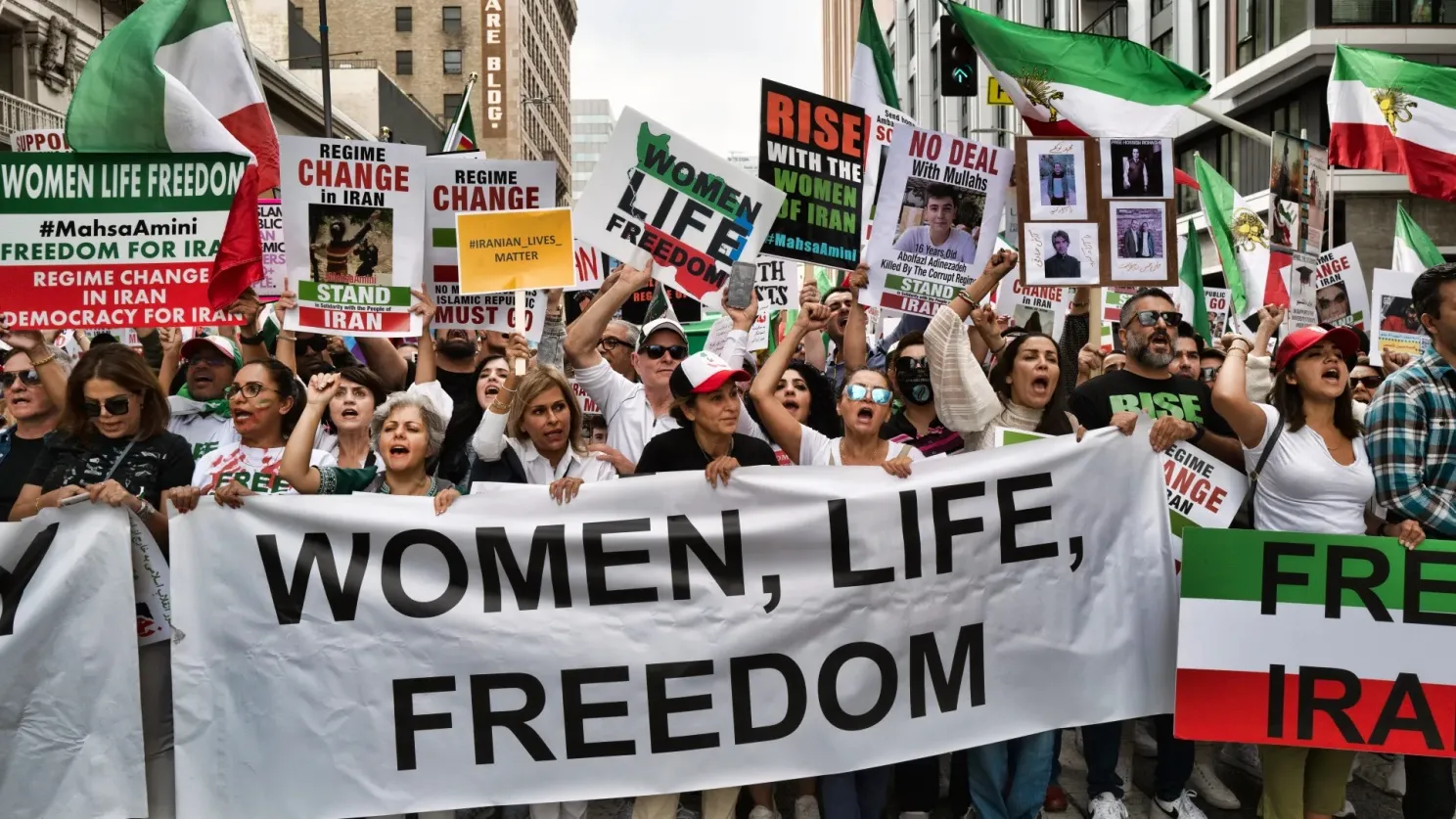
Yet the expected upheaval failed to materialise. Despite the enormous wave of protest and worldwide expressions of solidarity, the regime managed to hold on to power. Why? The answer was visible on the streets of Tehran during those weeks: the regime responded with its proven mix of propaganda and brutal repression. The internet and the mobile network were shut down to disrupt communication among the demonstrators. Security forces moved against protesters with tear gas, batons and firearms. Hundreds of people, many of them young, were killed, and more than 18,000 were arrested. Intimidation and violence took effect: there was no leading figure or organised opposition capable of channelling the anger on the street.
The tensions between the population and the state have nonetheless been ever-present since then. Several times in its recent history the nation has experienced dramatic upheavals, but these always occurred under specific circumstances.
Historical regime changes in Iran
1921-1925: Military coup and the rise of the Pahlavi dynasty
A military coup brings Reza Khan to power. With British backing he stages a coup against the weakened Qajar dynasty in 1921 and takes control of the military. In 1925 he deposes the last Qajar shah and crowns himself Shah Reza Pahlavi. He modernises Iran at high speed and builds a centralised state, but at the price of authoritarian rule: opponents are suppressed, the press and political parties banned.
1953: Operation Ajax - the CIA coup against Mossadegh
The democratically elected Prime Minister Mohammad Mossadegh nationalises the oil industry in 1951, alarming Britain and the United States. In August 1953, the CIA and MI6 orchestrate a coup under the code name „Operation Ajax“ that overthrows Mossadegh. Shah Mohammad Reza Pahlavi returns to power and, with the help of the feared SAVAK intelligence service, establishes an even more repressive monarchy. The coup shapes Iranian consciousness to this day and fuels deep distrust of Western interference.
1979: The Islamic Revolution
Under the leadership of the Shia cleric Ayatollah Ruhollah Khomeini, a broad revolutionary movement, ranging from Islamists to Marxists, unites against the autocratic shah. On 11 February 1979 the military capitulates and the shah has already fled. Khomeini proclaims the Islamic Republic of Iran, a religious state (theocracy) based on Shia jurisprudence. The new constitution institutionalises the rule of the supreme jurist (Wilayat-e Faqih) and subordinates all branches of state power to Islamic legislation (Sharia).
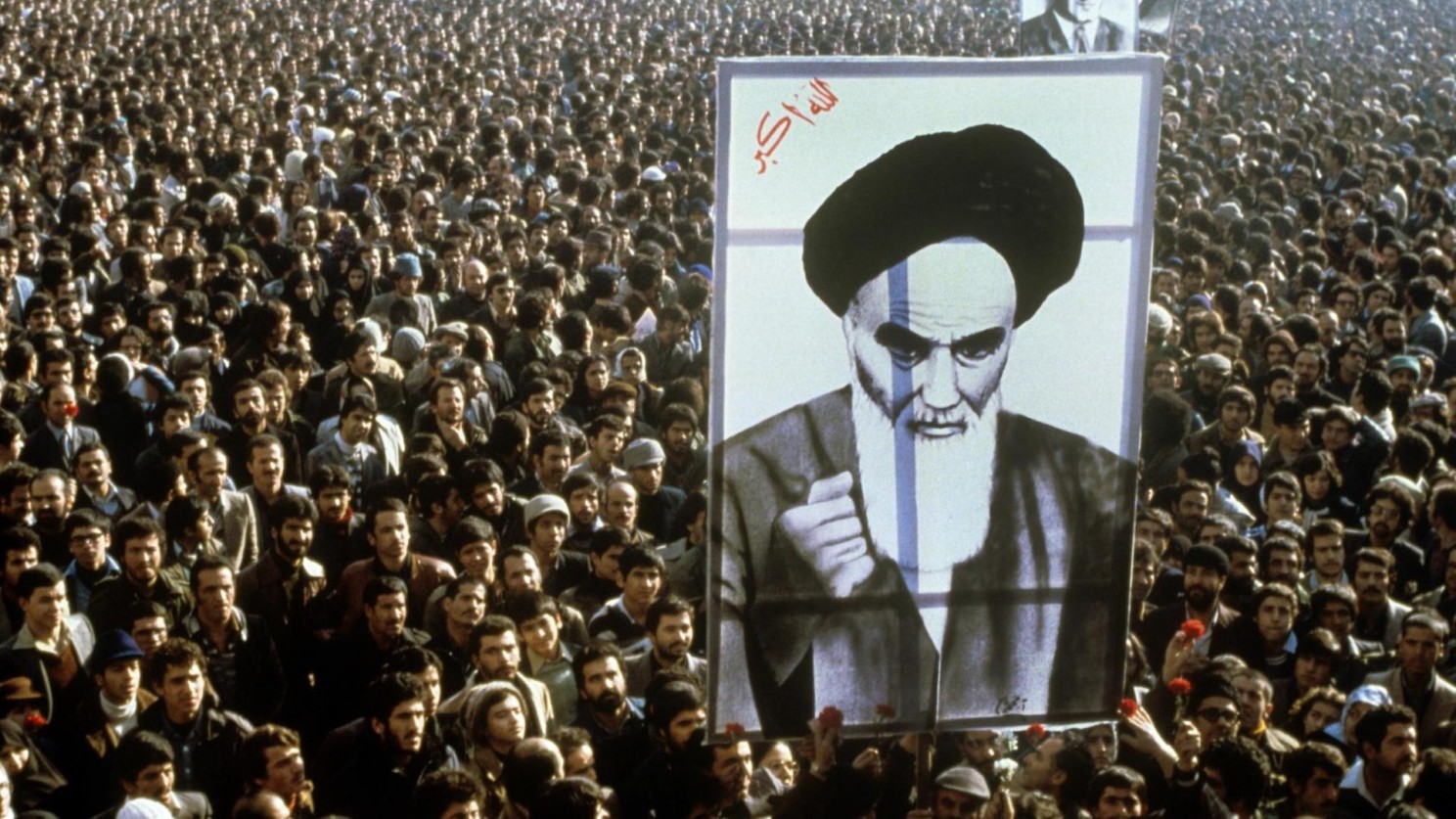
These historical upheavals show that regime changes in Iran were either driven by internal power actors (1921, 1979) or shaped by external intervention (1953). Each case had particular preconditions, whether the support of the military, foreign interference or a nationwide mass movement under charismatic leadership.
The political system and the protective mechanisms of the current regime
The Islamic Republic of Iran has a complex power structure designed to prevent regime change from within or from outside. At its centre is a theocratic system of rule in which elected institutions are subordinated to a web of religious authorities, revolutionary guards and supervisory bodies. Checks and balances exist primarily to ensure control loyal to the revolution. The following section examines the most important pillars of power and their functions:
The political system in Iran
Combines the highest political and religious authority. Controls the military, judiciary and media directly. Legitimised through the principle of Velayat-e Faqih (rule of the supreme jurist). Appoints or confirms all key positions.
The Revolutionary Guards (IRGC) are the central pillar of power, with their own armed forces and substantial economic resources. They report directly to Khamenei and control large parts of the economy: oil, gas and trade.
Mediates in conflicts between parliament and the Guardian Council. Advises the Supreme Leader on strategic questions. Members are appointed directly by Khamenei.
+ 6 jurists
Vets every candidacy and piece of legislation for ideological conformity. 6 clerics are appointed by the Supreme Leader, 6 jurists proposed by the head of the judiciary. Selects and screens all candidates before elections.
The head is appointed directly by the Supreme Leader. Controls the courts, the public prosecution and the prison system. Proposes the 6 jurists of the Guardian Council.
Coordinates defence, intelligence and foreign policy. Decisions must be confirmed by the Supreme Leader. Plays a key role in the nuclear programme and regional policy.
Heads the executive, but all major decisions are subject to the Supreme Leader. Candidates must be approved by the Guardian Council. Elected every 4 years by the people.
290 members, elected by the people. All candidates are vetted in advance by the Guardian Council for ideological conformity. Laws can be blocked by the Guardian Council.
88 clerics, elected by the people. The only body with formal authority to elect, supervise and, in theory, remove the Supreme Leader. In practice it serves as loyal confirmation.
Supreme Leader - unrestricted control over state and church
The Supreme Leader (Rahbar), currently Ali Hosseini Khamenei, combines the highest political and religious authority in the country and rules in effect absolutely. He controls the military, judiciary and media directly and derives his ideological legitimacy from the principle of Velayat-e Faqih (rule of the supreme jurist). This comprehensive control over personnel effectively prevents internal transfers of power, and even his death would hardly create a vacuum, since the Assembly of Experts ensures a seamless transition.2
A media monopoly, propaganda and permanent surveillance shape everyday life. Intelligence services (MOIS, IRGC) deploy modern technologies for surveillance, while police and militias brutally pursue regime-critical voices. Intimidation through public punishments such as imprisonment and executions consolidates the system of fear and effectively prevents collective resistance.6
Three scenarios for Iran's future

An internal shift could be triggered above all by the looming succession of the 84-year-old revolutionary leader Ayatollah Ali Khamenei. The most likely development after Khamenei's death is the takeover by a hardliner from the inner circle, for example President Ebrahim Raisi or Khamenei's son Mojtaba. He would continue Khamenei's ideological line and might even adopt an even more confrontational stance towards the West.
Far-reaching reforms appear unlikely, since so far all leading regime actors, whether hardliners or „reformers“, ultimately feel committed to the survival of the Islamic Republic. A „palace coup“ in the form of a power grab by the Revolutionary Guards (IRGC) is a frequently discussed scenario, especially in the course of a succession crisis. However, the IRGC is designed to protect the theocratic system, not to overthrow it.
Beneficiaries of an internal transfer of power
The population benefits from a reduction in repression and from economic recovery through the easing of sanctions. Moderate political currents would be strengthened.
The security apparatus and the conservative clergy secure or expand their position. The IRGC would cement its economic and political power for good.
Europe and the US benefit from Iran's return to the nuclear agreement and to trade. Israel and Saudi Arabia would have less reason for confrontation.
Prefer a hardliner successor, as they would retain an anti-Western ally. A pro-Western shift would diminish their influence.
Economic consequences
In the reform case, Iran would likely seek to shed sanctions, for instance through a new nuclear deal, in order to revive its ailing economy. A reintegration of Iran into the oil and gas market would be a game changer. With sanctions lifted, Iran could massively increase its oil exports within months. This would raise global supply and ease price pressure.
In the hardliner case, by contrast, Iran would remain under sanctions and largely excluded from the official world market. An intensified IRGC dominance of the economy could increase inefficiency and deter investors.
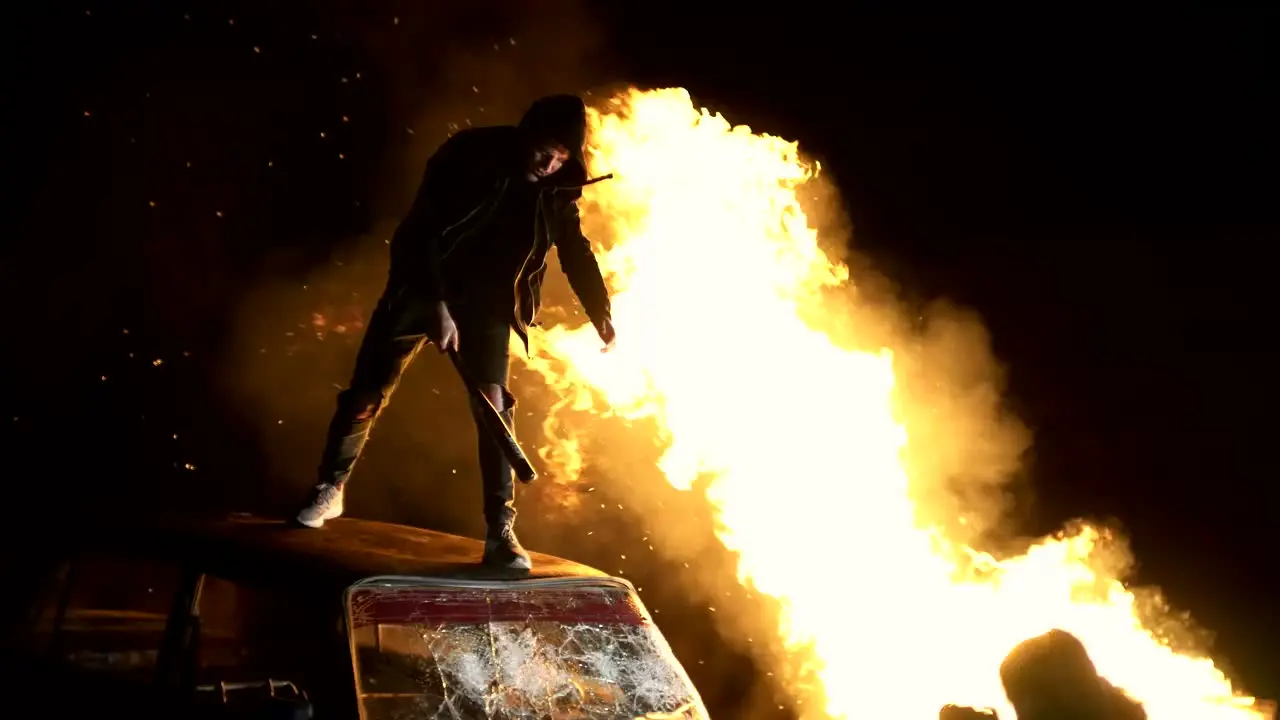
Nationwide popular protests have repeatedly shaken Iran in recent years (2009, 2017/18, 2019, 2022). So far, however, the regime has been able to put down every uprising. The probability of a fully successful popular uprising is currently assessed as relatively low.
An estimated 20-30 % of the population (bazaar traders, civil servants, revolutionary guards, their families and others) are directly dependent on the regime and fear chaos in the event of an upheaval.8 This stratum has so far not turned against the leadership; on the contrary, it helps sustain the repression.
Preconditions for a successful uprising
A common front among different social groups. So far, protesting groups are often divided along regional or class lines, without a united front.
Walkouts in key industries (for example a strike by oil workers) to build economic pressure.
Cracks in the security apparatus: when parts of the police, the military or the IRGC refuse to fire on their own population.
Beneficiaries of a fall of the regime
Political freedoms, social liberalisation and economic opening. Women, minorities and young people in particular hope for emancipation.
Strategically the biggest winners. Iran's proxy network would be neutralised. A democratic Iran could move closer to the West.
Would be rid of a rival that has limited their influence. Riyadh could benefit in the contest for dominance in the Islamic world.
Significant losses in the event of a pro-Western turn. Would use every lever to retain influence in a post-regime Iran.
Risks of fragmentation
The greatest risk of an abrupt collapse of the regime is the fragmentation of the country. Iran is ethnically, religiously and politically heterogeneous; a strong central state has held this diversity together so far. If central authority falls away, a power struggle between different groups becomes likely. A worst-case scenario would be a state similar to Libya or Syria.
Kurds in the north-west, Baloch in the south-east and Arabs in the oil-rich province of Khuzestan could pursue autonomy.
Shia hardliners or the Pasdaran could hold a theocratic bastion and start a guerrilla war.
Monarchists vs. republicans, the left vs. liberals: internal disunity could prevent an orderly transition.
Turkey, Saudi Arabia, Russia and China could each support proxies and prolong the conflict.
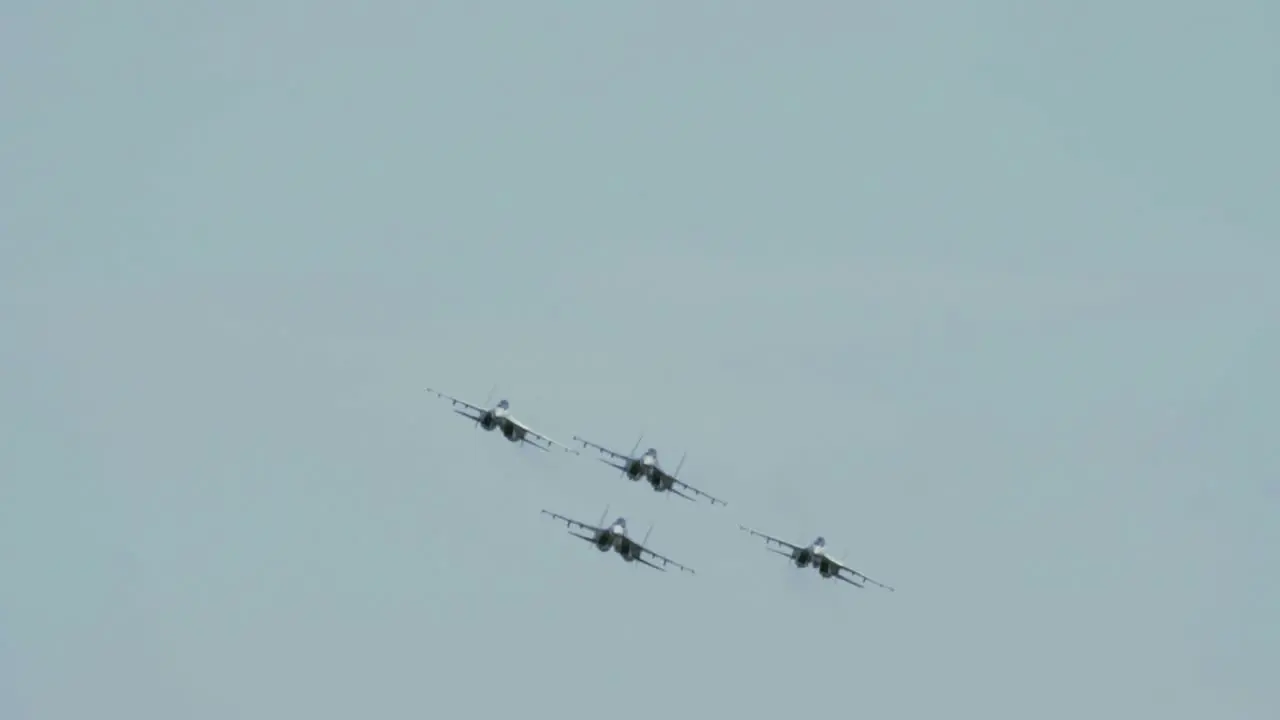
A regime change brought about from outside can take various forms, from targeted destabilisation (intelligence operations, cyberattacks, support for the opposition) through to open military intervention. The probability of a large-scale invasion along the lines of the 2003 Iraq War is very low today.
However, a limited military action cannot be ruled out, particularly on the part of Israel. Israel views a nuclear-armed Iran as an existential threat and has made clear on several occasions that it would, if necessary, strike Iranian nuclear facilities pre-emptively. Should diplomacy finally fail and Iran stand on the verge of a nuclear weapon, an Israeli military strike could follow.
Iran's response: proxy wars
Should a military intervention occur, Iran would probably respond with a mix of direct defence and indirect retaliation. A highly likely scenario is the opening of several proxy fronts:
Lebanon's Hezbollah could enter a war against Israel and attack from the north with thousands of rockets.
Shia militias could attack US troops and threaten the Green Zone in Baghdad.
Intensified missile and drone attacks on targets in Saudi Arabia and the UAE, plus a threat to international shipping in the Red Sea.
Iran could try to close the strait or attack tankers and warships in order to halt the flow of oil.
Consequences for the global oil market
Scarcely any other crisis scenario would hit the energy market as immediately as a war in the Persian Gulf. Even the announcement or threat of a closure of the Strait of Hormuz drives oil prices up. Experts estimate that even a targeted Israeli strike against Iranian oil terminals could cause a supply shortfall of more than one million barrels per day.10
If Iran were to retaliate by damaging tankers or paralysing traffic through Hormuz, several million barrels a day could be missing from the market in the short term. Oil prices could shoot up to 200-300 $ per barrel, fuelling inflation globally and choking off growth.12
Geopolitical implications
No collective declaration of war, but alliance partners would face a severe test. Turkey, as a neighbour of Iran, would be in a particular position.
Pro-intervention. Israel could initiate the military strike. A short-term gain, but with the long-term risk of a destabilised Iran.
Would resolutely reject any intervention. Russia could help Iran with air-defence systems. China would try to prop Iran up financially.
Secretly relieved, but during the conflict itself in the crosshairs of Iranian retaliation, especially against oil facilities.
Conclusion
The three scenarios differ above all in who initiates the change (internal elite vs. the people vs. foreign actors) and in how abruptly it occurs. Scenario 1 relies on gradual change within the existing framework and would be the most controlled variant. Scenario 2 would be a radical break from below, uncontrollable and with an uncertain outcome, the biggest unknown, but the one that would bring a genuine change of system. Scenario 3 would come from outside and carries the highest geopolitical risks.
Structurally, the current balance of power suggests that Scenario 1 (internal change) is the most likely in the medium term. The regime has shown that it is extremely adaptable and resilient and would rather adjust tactically than yield entirely. The ruling elites, especially the Revolutionary Guards, have a vital interest in preserving the system.
For the Iranian population this means ambivalent prospects. A sudden moment of liberation is unlikely, but Iran's history teaches that change sometimes comes unexpectedly, and when the hour strikes, those who stand up for their rights today will be ready to reshape the future of their country.
References
- Woman, Life, Freedom - Wikipedia
- Background: Role of the Supreme Leader | UANI
- Iran's Revolutionary Guards | Council on Foreign Relations
- The Guardian Council | Iran Data Portal
- Background: Role of the Supreme Leader | UANI
- „Woman, Life, Freedom“ - The Political Opinion - Konrad-Adenauer-Stiftung
- Iran ranks 2nd, 3rd in gas, oil reserves in world - IRNA English
- Protest movements in Iran signal growing need for change - GIS Reports
- Strait of Hormuz | Crisis Group
- Oil prices rise 3% after Iran launches missiles at Israel | Reuters
- Strait of Hormuz - Factsheet
- Oil prices rise 3% after Iran launches missiles at Israel | Reuters